
Kentia Palm
Howea forsteriana
Kentia Palm is an elegant, slow-growing palm suited to Auckland gardens, patios, courtyards, covered outdoor areas, and bright indoor spaces. It has a clean upright form and soft arching fronds that hold their appearance well in Auckland garden conditions.
At Auckland Palm Centre, we can help you choose the right Kentia for your site, from smaller plants for protected spaces through to larger grades for stronger immediate presence. Kentias can also work in full-sun Auckland sites when the plants are sun-hardened and the root zone is kept watered through dry periods.
Quick guide
Best for: Feature planting, courtyards, pool areas, entrances, bright indoor spaces, and general Auckland garden planting. Highly versatile across a wide range of applications.
Light: Full sun in Auckland outdoor garden and landscape settings when plants are sun-hardened and kept watered through dry periods; also suitable for filtered light, partial shade, and bright indoor spaces
Wind: Holds appearance well in typical Auckland garden conditions; very wind-exposed sites can damage or mark the foliage
Coastal sites: Suitable for protected coastal and near-coastal gardens with good drainage and reliable establishment watering
Growth rate: Slow; choose a larger grade if you want stronger immediate impact
Buying help: Ask us to help choose the right Kentia grade for your site, light, exposure, timeframe, and budget
Why choose Kentia Palm
Kentia Palm is one of the most versatile palms for Auckland gardens because it works across a wide range of settings. It can be used outdoors in full sun when sun-hardened and kept watered through dry periods, but it also suits courtyards, entrances, pool areas, covered spaces, and bright indoor positions.
Its main strengths are clean form, slower controlled growth, and foliage that holds its appearance well in normal Auckland garden conditions. It gives a palm look without becoming too coarse or fast-growing, making it useful where you want structure, height, and a tidy appearance over time.
Kentia Palm works well as:
• a feature palm in Auckland gardens
• a courtyard or entrance palm
• a poolside or covered outdoor palm
• an indoor palm in bright filtered light
• a protected coastal garden palm
• a full-sun outdoor palm where sun-hardened stock is used and the root zone is kept watered through dry periods
Kentia Palms in Auckland conditions
Kentia Palms perform well in typical Auckland garden conditions. They can handle full sun and wind exposure when established, sun-hardened, and kept watered through the drier months of the year.
Kentia Palms are also highly shade tolerant compared with many palms, making them one of the more versatile palm options for Auckland gardens. They can work in full sun, filtered light, partial shade, sheltered courtyards, covered outdoor spaces, and bright indoor positions.
Avoid very dry sites, poor drainage, harsh reflected heat, and very wind-exposed positions. These conditions can still stress the plant or damage the foliage, especially if watering is neglected during establishment.
Where Kentia Palms work best
Kentia Palms are useful where you want a clean palm look without fast, bulky growth. They work well around entrances, pools, courtyards, patios, decks, and garden areas where a slower, more controlled palm is preferred.
In outdoor landscapes, Kentia is a good option for full sun or part shade where the root zone does not dry out through the drier months. It is especially useful where you want foliage that stays tidy in normal Auckland conditions rather than a palm that quickly looks rough or overgrown.
Kentia can also be used in bright indoor spaces and covered outdoor areas. Indoors, it still needs good light, airflow, free drainage, and sensible watering. It should not be treated as a dark-corner plant.
For dense privacy screening, Kentia is usually not the first choice. A clumping palm such as Cluster Palm may be better if the main goal is fast coverage or lower-level screening.
Sun, wind, and coastal exposure
Outdoor-grown, sun-hardened Kentias can be planted in full sun year-round in Auckland. They will grow best when the root zone is kept watered through the drier months of the year.
Kentias generally hold their foliage well in normal Auckland wind exposure. Very wind-exposed sites can still mark or damage the leaves, so use some judgement with exposed ridgelines, wind tunnels, and open coastal sites.
Kentia Palm is suitable for many coastal Auckland gardens, especially protected or semi-sheltered sites. We still avoid treating it as a hard salt-wind palm. In direct exposed seafront wind, expect possible frond marking and use a larger hardened plant with good watering and some shelter.
Grade and size guide
Kentia Palms are slow-growing, so the starting size has a strong effect on the finished look. Smaller grades are useful for pots, patios, indoor spaces, and protected courtyards. Larger grades are better where the planting needs visible structure from the start.
As a general guide:
Small to mid grades: Suitable for pots, patios, indoor spaces, and protected courtyards.
45L and larger: Better for garden planting where stronger structure and presence are wanted.
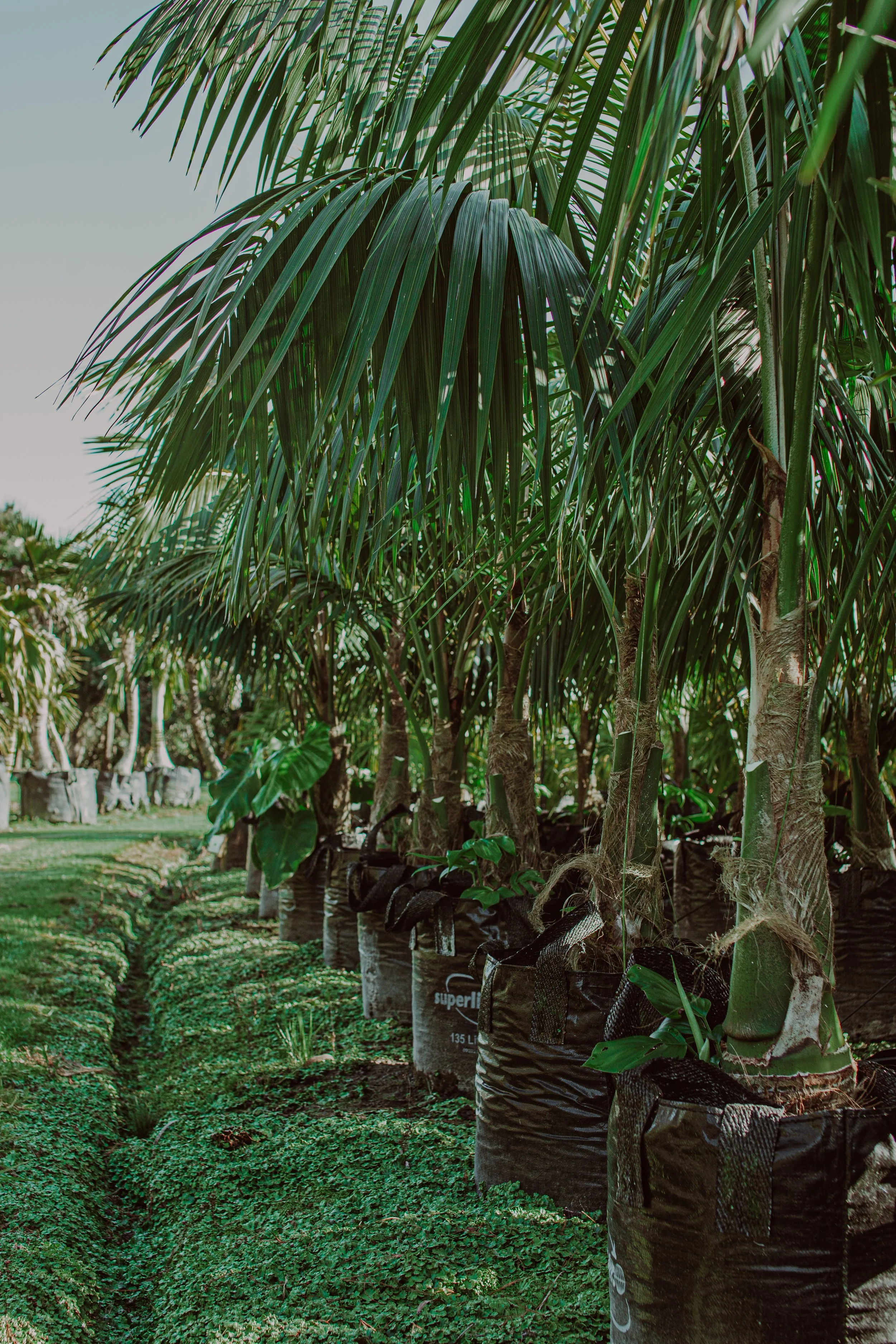
80L, 135L, and larger grades: Best for feature planting, entrances, pool areas, and landscape projects where visual impact matters from day one.
Current Kentia grades can change, so contact us for current sizing, pricing, and availability.
Why buy Kentia Palm from Auckland Palm Centre
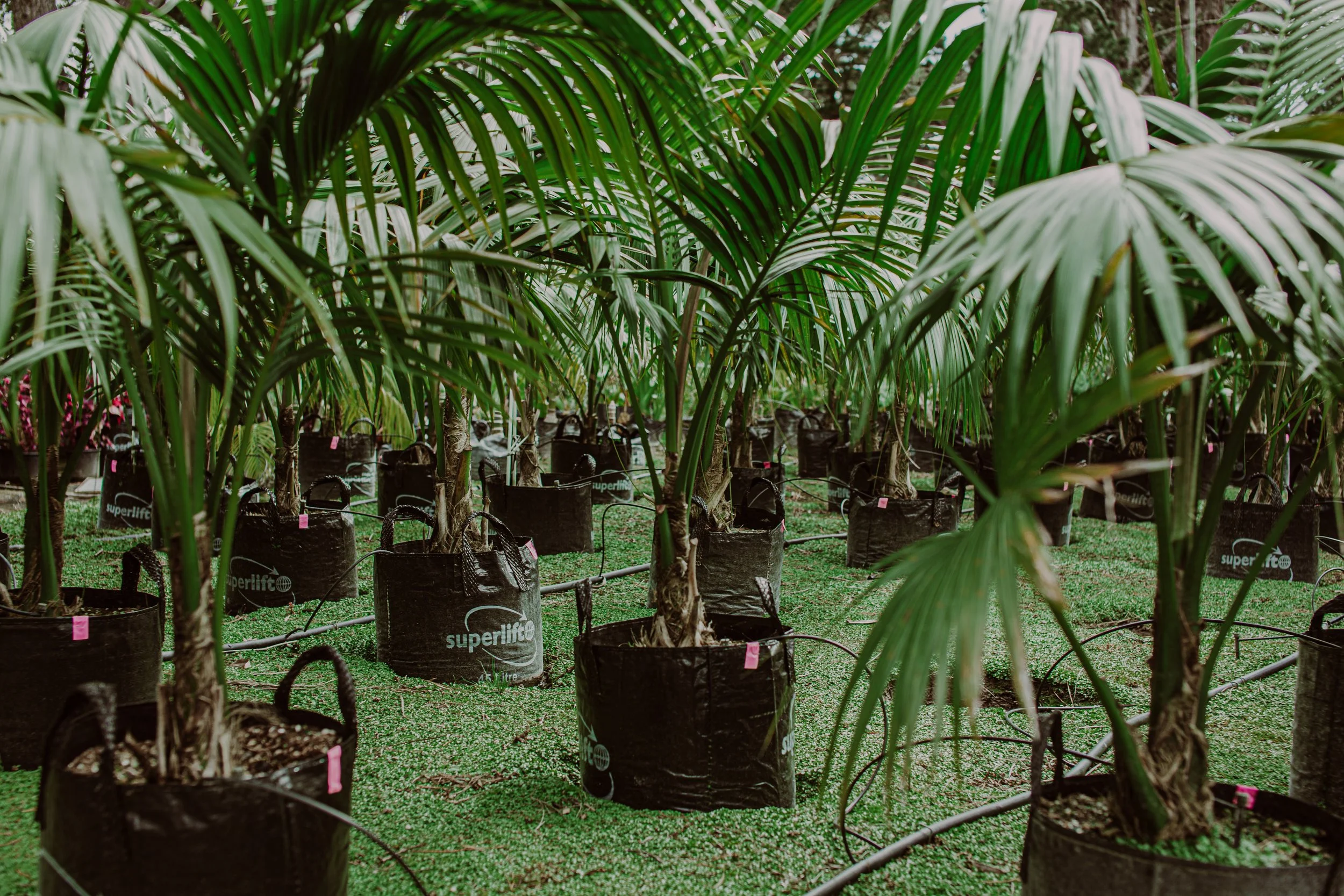
Kentia Palms vary in size, shape, fullness, and suitability for different sites. At the nursery, you can compare grades in person and choose plants that suit the look and position you are working with.
We can help you decide whether Kentia is the right palm for the site, or whether another palm would give a better result for screening, wind exposure, speed, or scale.
For larger or visually important plants, you can choose the exact Kentias you want. We tag them with your details and deliver those same selected plants to your site.
Soil, water, and establishment
Kentia Palms perform best in free-draining soil with organic matter worked through the planting area. Avoid heavy, stagnant, or poorly drained positions.
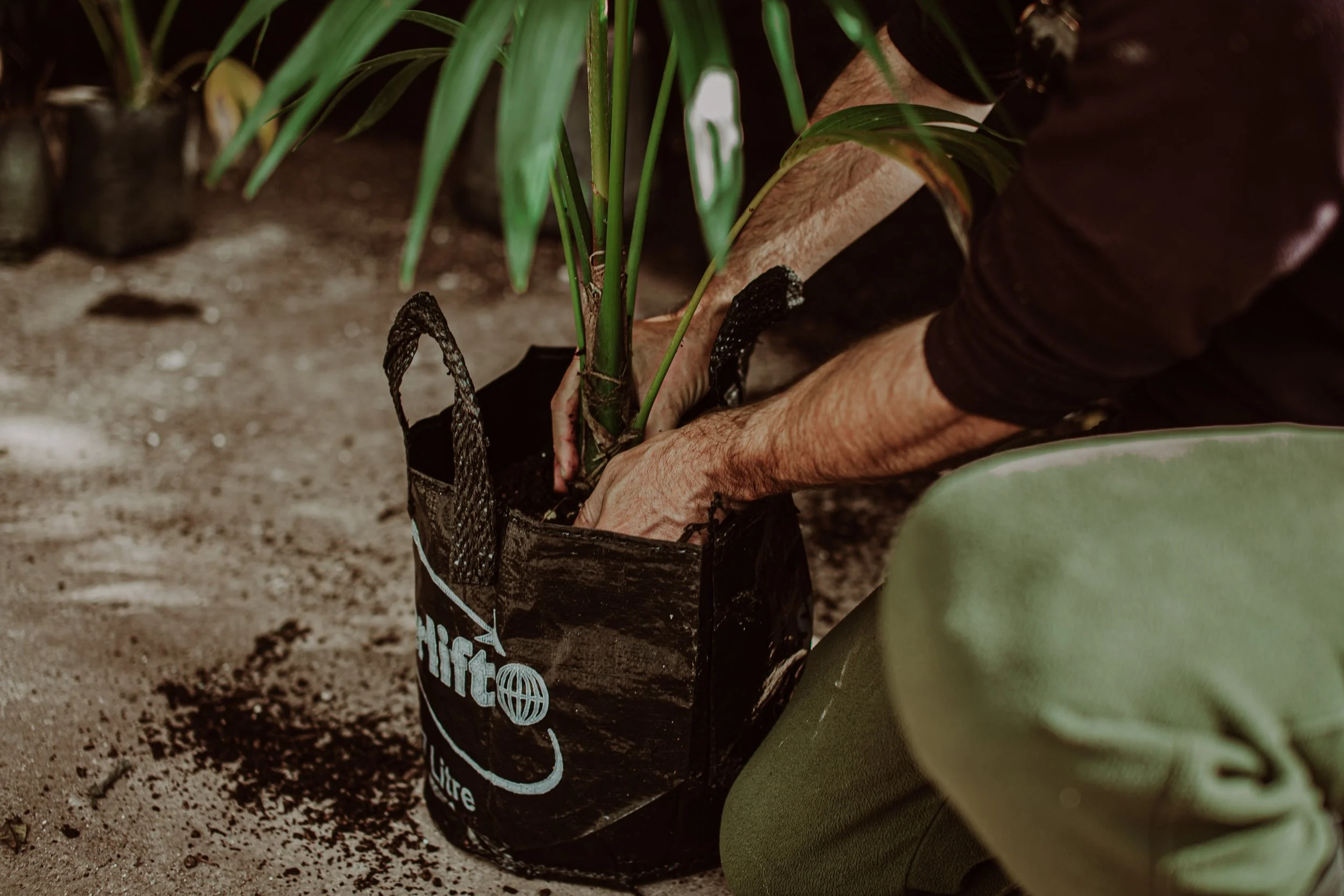
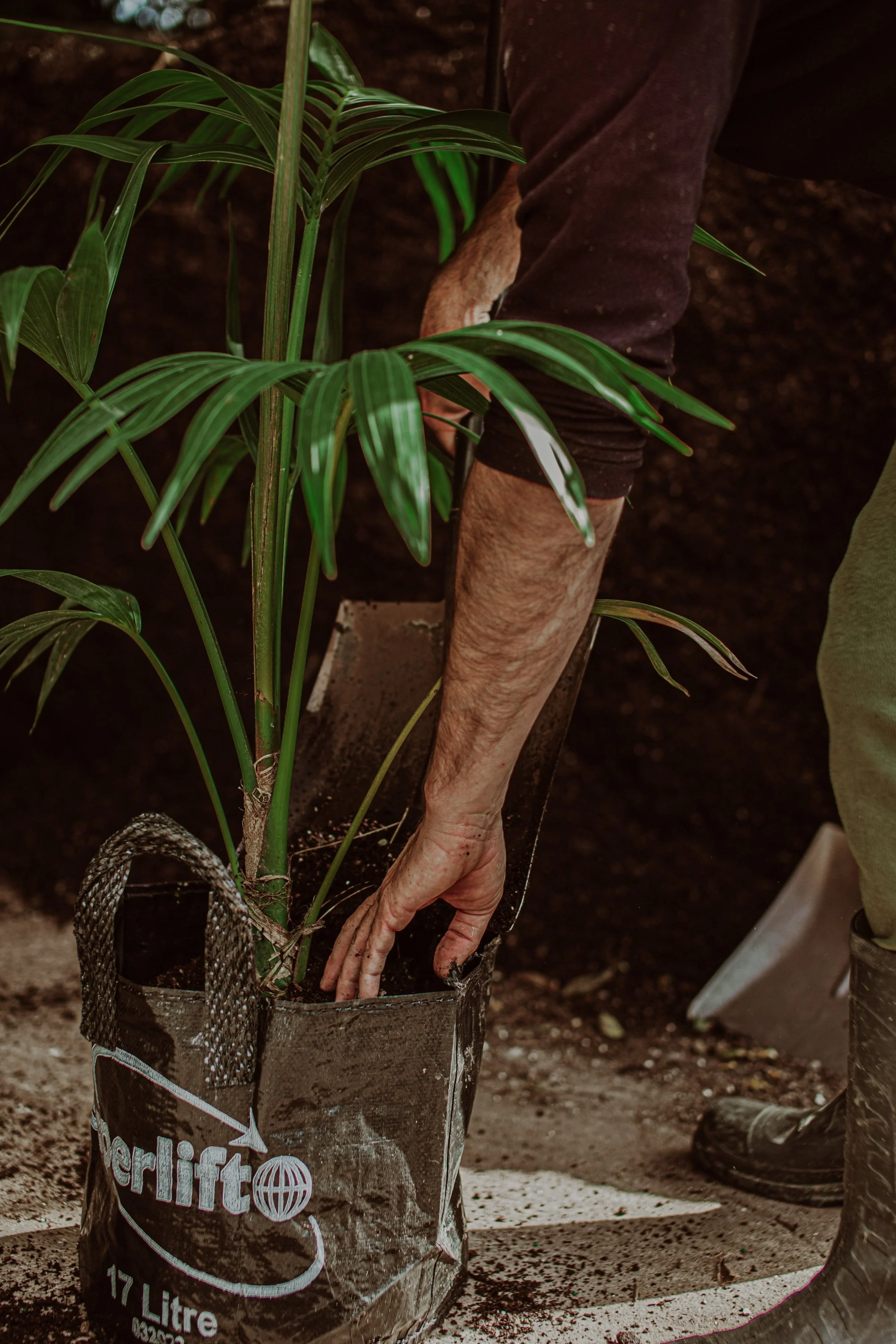
Plant at the same height as in the nursery bag or pot. Do not bury the base of the palm. After planting, water well and keep the root zone from drying out while the palm establishes.
In full-sun positions, Kentias need more attention through the drier months of the year. They do not need to sit wet, but they should not be allowed to dry out for long periods.
Use mulch to help keep the root zone cool and evenly moist, keeping mulch away from the trunk base. Remove only unsightly, dead, or badly damaged fronds; do not over-prune green fronds to make the plant look tidier.
Transport, handling, and delivery
Smaller Kentia grades can fit in cars, utes, or trailers depending on the plant size. We can help load suitable plants at the nursery.
Larger Kentias are best moved carefully so the crown, fronds, and rootball are protected. Where access allows, we can deliver larger plants to your site.
Kentias handle careful transport and transplanting well, but they still need sensible care. Avoid crushing the crown, breaking fronds unnecessarily, or letting the rootball dry out before planting.
Current availability and planting supplies
Contact Auckland Palm Centre for current Kentia Palm grades, sizing, pricing, and availability. We can help match the right grade to your site, light level, access, timeframe, and budget.
We also stock the compost, pumice, and fertiliser we recommend for planting, and can deliver them with your palms if needed.
Call or text: 022 508 6020
Visit: 40 Paremoremo Road, Lucas Heights, Auckland
Frequently asked questions
Can Kentia Palms grow in full sun?
Yes. Outdoor-grown, sun-hardened Kentias can be planted in full sun year-round in Auckland. They grow best when the root zone is kept watered through the drier months of the year.
Are Kentia Palms good in wind?
Kentias generally hold their foliage well in normal Auckland wind exposure. Very wind-exposed sites can still mark or damage the leaves, so exposed ridgelines, wind tunnels, and open coastal sites need more care.
Can Kentia Palms grow indoors?
Yes. Kentia Palms are one of the better palms for bright indoor spaces. They tolerate lower light better than many palms, but they still need good light, airflow, free drainage, and sensible watering. Do not treat them as dark-corner plants.
Are Kentia Palms good for screening?
Not usually as the first choice. Kentia is slow-growing and better as a feature or structure palm. For dense privacy or lower-level screening, Cluster Palm or another clumping palm may be more suitable.
Will Kentia Palm roots cause damage?
Kentia Palms have fibrous palm roots, not large woody invasive roots. They are generally low risk near paving, retaining walls, pools, pipes, and buildings compared with many ordinary trees. We still recommend sensible spacing from structures, especially where there are old pipes, weak retaining walls, shallow paving, or poor drainage.
Are Kentia Palms clumping palms?
No. Kentia Palm is not a clumping palm. When you see a multi-stem Kentia, it is usually several Kentia plants grown together in the same pot or bag to create a fuller look.
How fast do Kentia Palms grow?
Kentia Palms are slow-growing. Choose a larger grade if you want stronger immediate impact.
How big will a Kentia Palm get?
Final size depends heavily on conditions. Irrigation, soil, light, competition from nearby plants, wind exposure, available garden space, and long-term care all affect how large and full it becomes over time.
What sizes of Kentia Palm are available?
Auckland Palm Centre supplies Kentia Palm in selected grades depending on current stock and sale readiness. Contact us for current sizing, pricing, and availability.
Where can I buy Kentia Palms in Auckland?
Auckland Palm Centre grows and supplies Kentia Palms from its nursery at 40 Paremoremo Road, Lucas Heights, Auckland.